NEW CONSTRUCTION · EXISTING HOMES
A built-in system designed around your life.
Bring true whole-home central vacuum convenience to a new house or retrofit an existing one. We plan coverage, piping, inlets and equipment with the home in mind.
REAL EXPERIENCE. VERIFIED TRAINING. LOCAL COMMITMENT.
Experience that goes well beyond the equipment.
Our company’s roots date to 1987. I have been in business since 1989, and established in the Oklahoma City area since 2003. Our VDTA certification in central vacuum installation reflects specialized industry training—not just a general home-service claim.
Good installation starts before the first hole.
Thoughtful inlet placement allows a hose to reach the spaces you actually clean. We consider furniture layouts, stairways, garages, utility rooms, floor types and the places that will be difficult to reach later.
In new construction, piping and low-voltage wiring can be coordinated before walls are closed. For existing homes, the plan centers on available chases, attic or crawlspace access and minimizing disruption while achieving useful coverage.
Where we can help
- New-construction rough-ins and final equipment installation
- Existing-home central vacuum retrofits
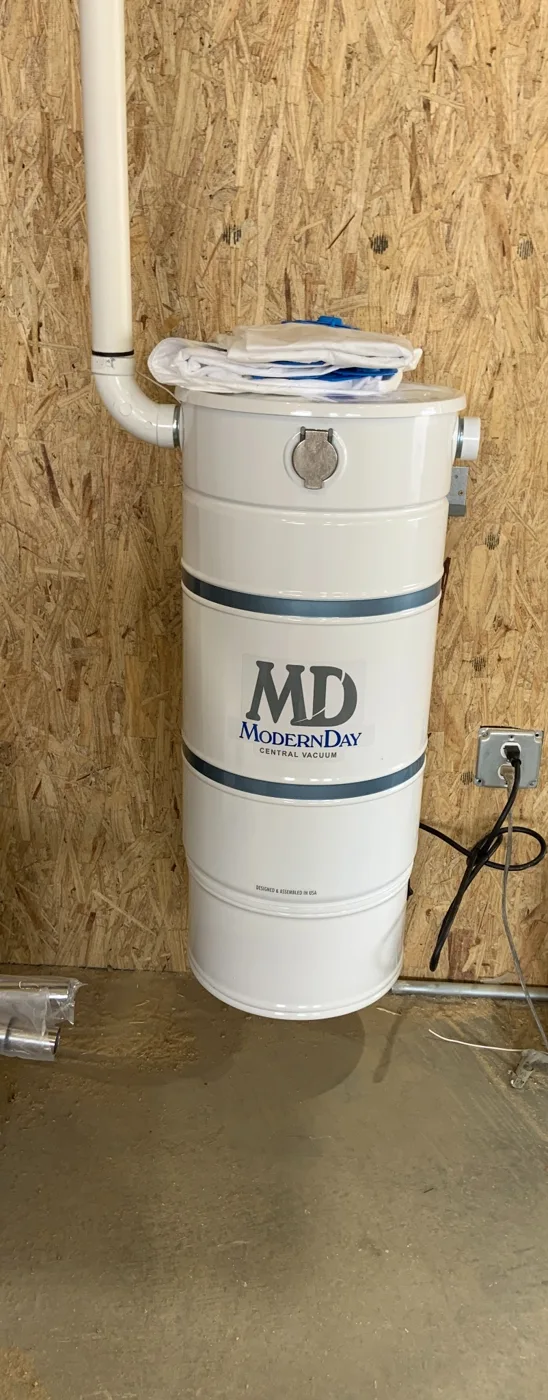
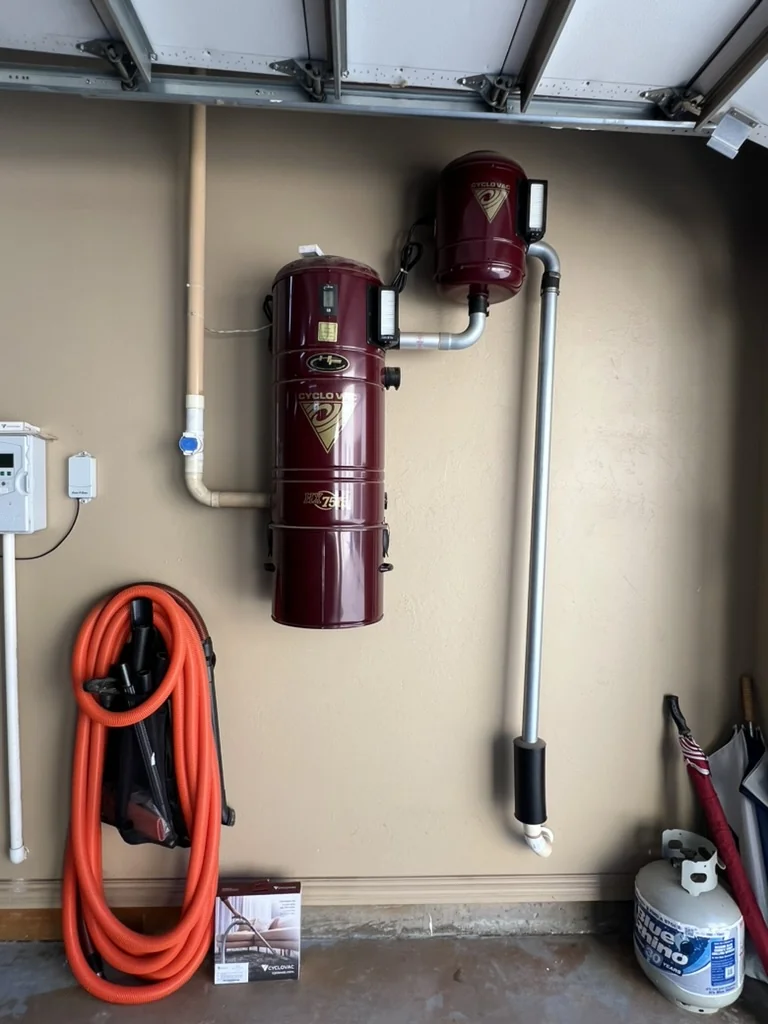
- Power-unit selection and serviceable installation location
- Garage cleaning outlets and additional inlets
- Hose lengths, power-nozzle compatibility and tool choices
- Retractable hose systems when a Hide-A-Hose design is appropriate
ADVANCED VACUUM SYSTEMS
No two houses need the same layout.
Square footage alone never tells the whole story. Hallways, floor plans and the available path for tubing determine what will actually work.
Our goal is comfortable cleaning coverage, sensible service access and an installation that looks intentional—not an assortment of inlets placed by guesswork.
GOOD QUESTIONS. STRAIGHT ANSWERS.
Frequently asked questions
Can a central vacuum be added to an existing home?
Many existing homes can be retrofitted. Feasibility depends on routing access and the desired inlet locations.
Do I need an inlet in every room?
Usually not. Hose length and reach should guide inlet placement.
Can I add an inlet to an older system?
Often possible if the existing system and piping arrangement can accommodate the extension.
Can a central vacuum system be installed in an existing house?
Often. Feasibility depends on access to the attic, basement, garage or crawlspace, along with a practical route for piping and electrical connections.
When should central vacuum rough-in occur during construction?
The tubing and low-voltage wiring are normally planned before walls are closed. Coordinating with the builder early helps locate inlets and the power unit.
How many inlets does a home need?
The number and position depend on the layout and usable hose reach. Planning should account for furniture, stairs and the areas that need convenient access.
Where should the central vacuum power unit be installed?
A garage, utility room or similar suitable location is common, depending on manufacturer requirements, power availability, ventilation and access for maintenance.
Can I use a retractable hose system in a new build?
Yes, when the layout supports the correct retractable-hose tubing runs and inlet locations. It is easiest to plan that infrastructure early in construction.
Does every home installation require opening finished walls?
Not necessarily. Installers may be able to route tubing through accessible spaces, although some homes require limited wall openings.
Can the system be upgraded later?
A well-planned piping system may support later power-unit or accessory changes, subject to compatibility, adequate airflow and manufacturer specifications.
WHATEVER YOUR SYSTEM NEEDS
There’s a smarter next step.
Edmond central vacuum installation →
LOCAL HELP · OKLAHOMA CITY METRO
Make the plan before you build.
Call to discuss floor plans, new construction, remodels or an existing home.